The problem
Seven examples: different parties, different countries, 40 years apart. In every one, the public were lied to recklessly and intentionally in a way that enormously abused public trust and democracy, and only one of them was prosecuted for doing so.
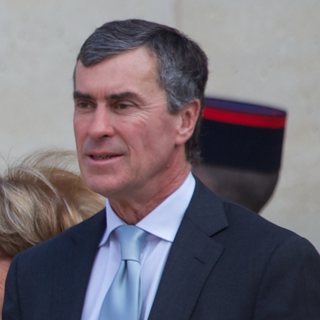
2016 · The EU referendum
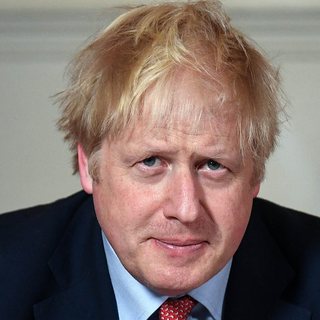
Boris Johnson, Mayor of London and Member of Parliament
Every one of those figures describes the same thing. No two of them agree. And look at the last one: £10 billion a week is £520 billion a year. He described the same payment as eight billion pounds and as five hundred and twenty billion pounds, in the same campaign.
This is where almost everybody goes wrong. People remember the bus, and then they argue about whether the true figure was £350 million, or £250 million, or something else. That argument never ends, because the answer depends on what you choose to count, and both sides have been shouting numbers at each other ever since.
It is a trap, and it is the wrong question. The question is not what we sent to Brussels. The question is what Mr Johnson knew when he said it.
No one who believed his own figures could produce a range that wide. And we do not have to guess what he believed, because he was asked directly, on camera, by Tom Bradby of ITV News, during the campaign.
Tom BradbyWe send £350 million to Europe. We don’t.
Boris JohnsonWe do.
Tom BradbyYou know we don’t. Admit that that figure is grotesquely misleading at best.
Boris JohnsonI won’t, I won’t… If you take out the abatement, and the money that comes back, the UK money that comes back via Brussels, the figure is obviously lower.
He knew. He said so out loud, to a journalist, while the campaign was still running. And he carried on saying it anyway.
After the result, Vote Leave’s campaign director was asked in his own written account whether they would have won without the £350 million claim. He answered: “All our research and the close result strongly suggests No.”
Sources: The Telegraph, 16 March 2016 · The Sun · Dominic Cummings, January 2017 · the Bradby interview · the UK Statistics Authority on the £350 million
2003 · Iraq
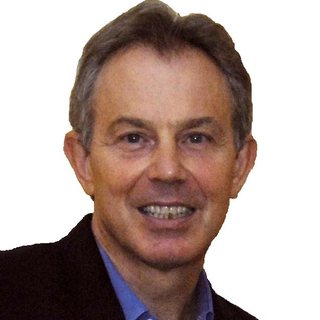
Tony Blair, Prime Minister
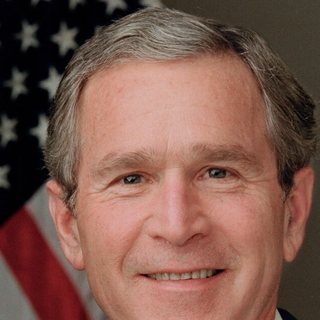
At Camp David on 7 September 2002, President Bush said that a report from the International Atomic Energy Agency showed Iraq was “six months away from developing a weapon”. Standing beside him, the Prime Minister said: “Absolutely right.”
No such IAEA report existed. The agency’s six to twenty-four month estimate described Iraq before the 1991 Gulf War, and it had found no evidence Iraq still had the capability. The White House later said the President had meant a different IAEA report. That one did not exist either.
Then there were the mass graves, and here the problem is not the number. It is the verb.
He is not saying that a great many people are believed to have died under Saddam Hussein. He is saying the bodies have been found. Discovered. Already. He says it three times, and the third time he adds that it does not get a great deal of publicity, but that it is true.
It was not true. In July 2004 The Guardian asked the head of the coalition’s own mass graves action plan how many bodies had been exhumed through official procedures. Her answer was: “Through official procedures? None.”
He was not rounding up an estimate. He was telling the public that the remains of three hundred thousand people had been dug up and counted, when not one body had been officially exhumed. That is a Prime Minister asserting the physical evidence of a crime on the scale of a genocide, and the evidence did not exist.
And look at when he said it. The weapons had not been found. The case he had taken the country to war on had already collapsed in public. So the justification was replaced, and this was the replacement.
Claiming to have found what you have not found is not an overestimate. It is the fabrication of evidence, offered to a country that had just been told the first reason for the war was wrong.
The 45-minute claim at the centre of the September 2002 dossier rested on a single uncorroborated source. The February 2003 dossier was copied from a postgraduate thesis, with the wording hardened on the way: “monitoring” embassies became “spying” on them, “aiding opposition groups” became “supporting terrorist organisations”.
Sources: White House transcript, 7 September 2002 · what the IAEA report actually said · White House transcript, 16 April 2004 (the 300,000 claim) · The Observer, 18 July 2004 · Brendan O’Neill, ‘Unrecorded victims’, The Guardian, 21 July 2004 · the Chilcot report · Ibrahim al-Marashi on the copied dossier
2020 · PPE Medpro
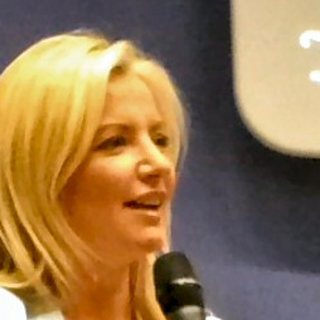
Baroness Mone, Member of the House of Lords
She referred PPE Medpro to the government through the high-priority channel open to parliamentarians during the pandemic. The company was awarded contracts worth more than £200 million.
For two years she denied, through lawyers and in public, that she had any connection to it.
In December 2023, on the BBC, she admitted she had “made an error in saying to the press that I wasn’t involved”, and that she is a beneficiary of trusts holding around £60 million of the profit from the deal. In the same interview she said that lying to the media is “not a crime”.
When it comes to statutory law, she was right. That is precisely the gap that Amendment 66A to the Public Office (Accountability) Bill is designed to close.
Sources: The Scotsman, on the Kuenssberg interview · Insider
1964 · Vietnam
The Gulf of Tonkin
Politicians told the world that the warship USS Maddox had suffered an unprovoked attack in the Gulf of Tonkin. That claim secured the Gulf of Tonkin Resolution in 1964, which enabled the full American war in Vietnam from 1965.
It was a lie. The United States was not the victim of an unprovoked attack. It had attacked first.
Millions died. Again, no politician faced a jury.
2010 · Tuition fees
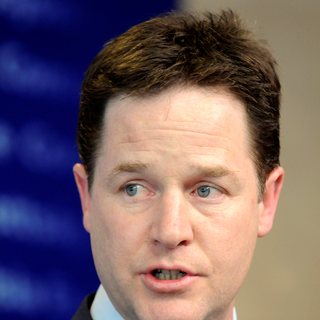
Nick Clegg, Leader of the Liberal Democrats, later Deputy Prime Minister
Nick Clegg did not simply lie about tuition fees. What he did is more complicated than that, and in one way worse.
His whole campaign was built on ending broken promises. That was the offer. A new kind of politics, a new period of hope, a politician who would finally keep his word. He campaigned on it hard, and he inspired a generation of young people who had never voted before.
The centrepiece of it was a signed pledge to vote against any rise in university tuition fees “under any circumstances”.
After he became Deputy Prime Minister, he voted to triple tuition fees instead. Students felt betrayed. Central London was turned into a riot zone. People got hurt. An entire generation’s first experience of voting in a general election was poisoned, and it left them feeling exploited, used and betrayed. It appeared clear to young people that Nick Clegg had used them in order to get into power.
Then came the apology, and he did say sorry for breaking it. That is the part everybody remembers: “We didn’t stick to it, and for that I am sorry.”
But in the same breath he admitted something far more serious, and almost nobody noticed it. “It was a pledge made with the best of intentions, but we shouldn’t have made a promise we weren’t absolutely sure we could deliver.”
That is not an admission that he broke a promise. It is an admission that it was not possible for him to honestly claim that the promise would be kept “under any circumstances” because he wasn’t “absolutely sure” that it could be kept at all.
So the promise was dishonest at the moment it was made. He was campaigning to end broken promises forever, as his single biggest argument, while making a promise he already knew he might have to break.
Source: Times Higher Education, on the apology and the NUS response
2008 · Bosnia
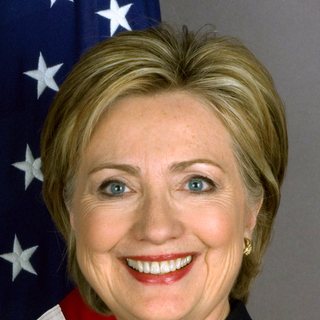
Hillary Clinton, United States Senator and candidate for President
Running for President in March 2008, she told an audience that she had landed in Tuzla under sniper fire, and had run from the plane with her head down.
CBS News still had the tape. There was no sniper fire. There was a greeting ceremony. She walked down the ramp with her sixteen-year-old daughter, unhurried, shook hands on the tarmac and stopped to meet an eight-year-old girl who read her a poem.
She had made it up. Asked about it the next day she stood by it: “Now, that is what happened.” A week later, once the footage had been broadcast, she said she had “misspoke”.
A claim about her own judgement under fire, made while asking the public to elect her Commander-in-Chief, and it only collapsed because somebody still had the tape.
Sources: PolitiFact, 25 March 2008 · ABC News, on the “misspoke” admission
2013 · France
Jérôme Cahuzac, Budget Minister
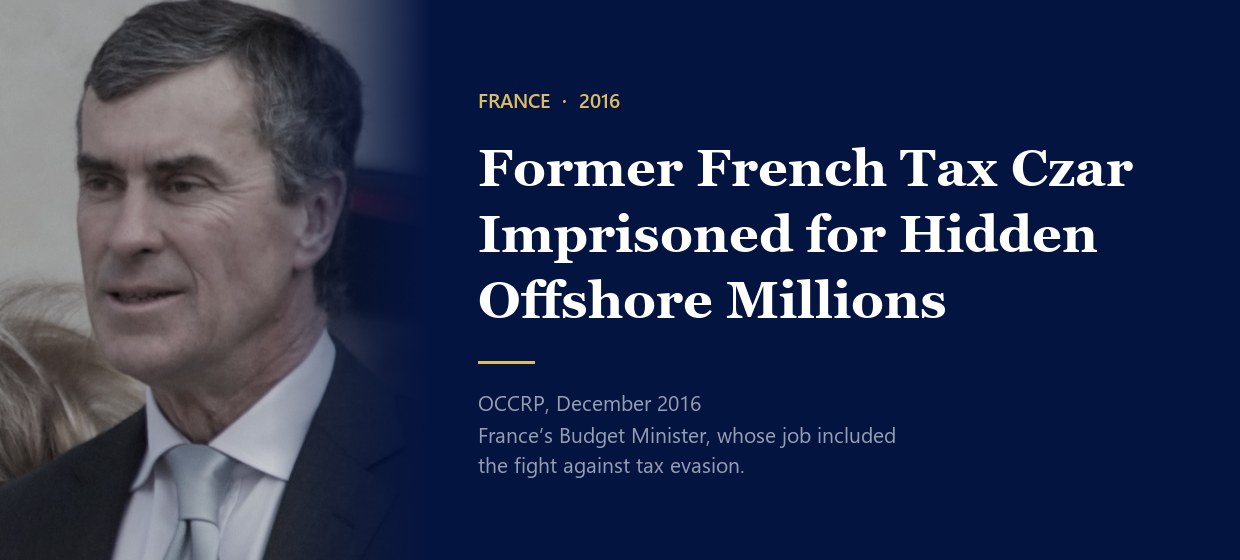
His job included leading France’s fight against tax evasion. He denied, repeatedly and including to the National Assembly, that he held an account abroad.
In April 2013 he admitted he had hidden about €600,000 in Switzerland, later moved to Singapore through offshore companies.
He was convicted of tax fraud. On appeal he received four years with two suspended, a €300,000 fine, and a five-year ban from holding public office.
France prosecuted its minister. That is the only example on this page where anything happened at all.
Sources: OCCRP · Public Sénat (AFP)
Ipsos has asked the British public which professions they trust to tell the truth every year since 1983. This is the 2025 result, from 1,022 adults interviewed in November 2025.
Polling by Opinium for the campaign group Compassion in Politics found 73 per cent support for making deliberate lying by politicians a criminal offence, including 71 per cent of Conservative voters and 79 per cent of Labour voters.
Sources: Ipsos Veracity Index 2025. The Opinium figure is campaign-commissioned research and should be read as such.
A Prime Minister speaking as Prime Minister would be covered. So would every civil servant, police officer, nurse and head teacher in the country.
No Member of the Commons. No Member of the House of Lords. No Member of the Scottish Parliament, Senedd Cymru or the Northern Ireland Assembly. And because the Bill never defines what acting “in their capacity as such” means, cases would be fought over which hat somebody was wearing long before anybody asked whether the public had been deceived.
Amendment 66A adds every legislator in the United Kingdom, protects parliamentary privilege and honestly held political opinion on its face, and defines capacity, functions and harm.
Portraits: Tony Blair, George W. Bush and Robert McNamara, public domain. Michelle Mone by B Milnes, CC BY-SA 3.0. Hillary Clinton, US Department of State. Boris Johnson, Nick Clegg and Jérôme Cahuzac from the ExecProsec archive.